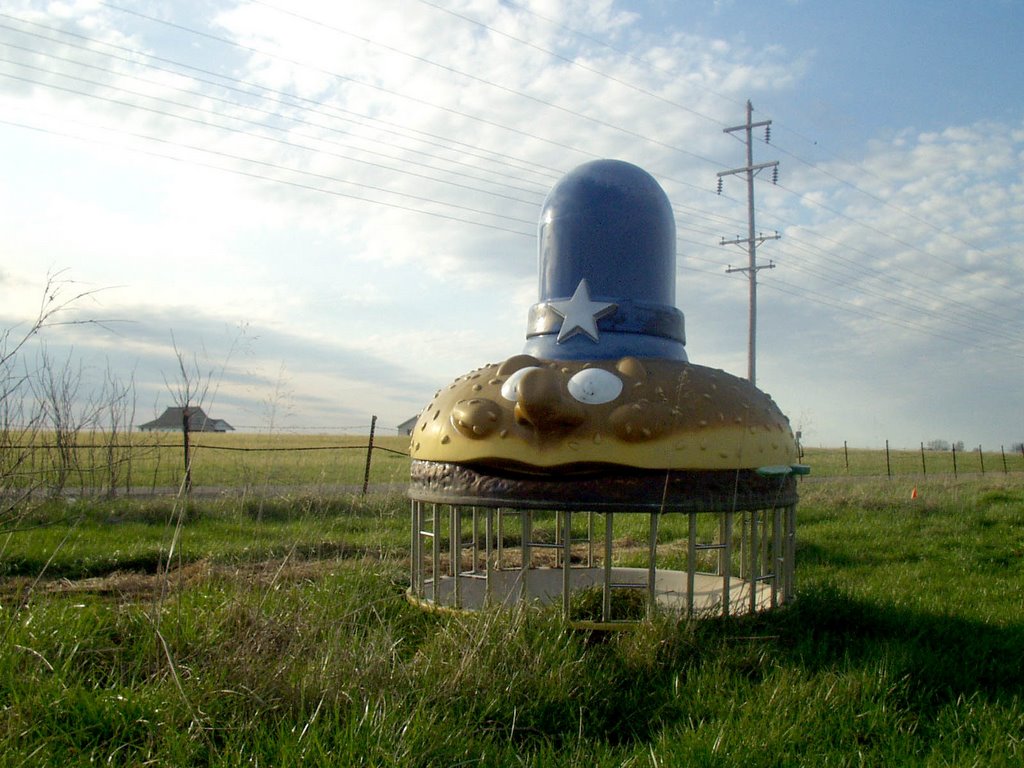
In Beckemeyer, Illinois--between Carlyle and Breese--there used to be a drive-in theater called the Car-Breeze.The screen was torn down years ago, but the marquee survives, hidden under a pasteboard sign. Until recently, the concession/projection building was still standing, covered with weeds and surrounded by rusty farm implements. Some of the letters spelling CAR BREEZE DRIVE-IN were still attached to the counter, and some of the equipment was still rusting away under the rotted ceiling. I used to check on the status of this relic every time I passed by. Today, on my first visit in several months, I couldn't help but notice that the lot had been cleared of weeds and implements, and the old drive-in building had at last been leveled.But in its place stood something pretty wonderful: Yes, it's the severed bun of Officer Cheeseburger, McDonaldland's most-decorated keeper of the peace.His torso was found several paces away.Actually, the discovery of this wayward piece of playground equipment wasn't a very big surprise. For a few years, a grade school in nearby Breese has been in possession of another piece of old-school playground equipment, apparently donated when a local McDonald's upgraded to the Playplace: a slide festooned with the head of Captain Crook, a long-decommissioned McDonaldland villain. I think I remember seeing other pieces of McDonald's playgrounds scattered around this part of Illinois, usually in school or civic park playgrounds. Do you know of any?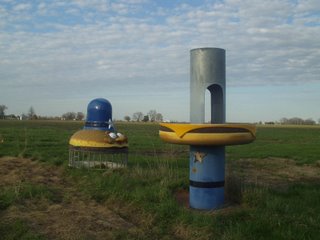
News from my neighborhood: The Southside location of Rizzo's is gone! The venerable Italian restaurant has vacated its digs on Chippewa, and a new Turkish/Mediterranean joint is about to open in its place (which, I was sad to learn today, was not the former location of a Parkmoor drive-in, as I'd previously thought). The new restaurant is called Aya Sofia, and I'm pretty curious about it. I haven't seen any advance press, though. Anyone got any inside info or an opening date?
Wow, it's been a while. I've been traveling and researching and photographing all kinds of stuff as diligently as ever, but when I buzzed through several unfamiliar Midwestern cities in one day and only had time to take a few pictures, I started debating with myself about whether to bother posting my findings until I had more background information. While it's fine to present a photo and say "look at this rusty old neon sign at a bar in Dubuque," part of me wants to know how old it is, and what the bar's like inside, before I go slappin' these pictures up on the Web. Otherwise, all you're getting is a bunch of pictures and no text. But I guess my Comprehensive Review Of Every Cool Thing I've Ever Seen Anywhere can wait for a real website (as opposed to a blog), so I can add to it incrementally as information arrives, rather than chronologically. In the meantime, I've got a lotta stuff to dump on you from a trip to northeastern Iowa. But not right now.
 I've been putting off delving into the mid-century legacy of St. Charles because the place has always kind of rubbed me the wrong way. When I was a kid, I lived just across the river from this historic town, and the most direct route to the shoe store my mom frequented there involved one of the scariest bridges in the Midwest (it's now been imploded and replaced). Then a friend who lived there pissed me off. And, finally, St. Charles County is the place all the white-flight refugees wound up when the dreaded non-caucasians followed them to their original haven in northern St. Louis County. Dozens of shabby, generic subdivisions went up, most of them of the sort that appears to consist of a series of two-car garages with modest living quarters tacked on behind them as an afterthought. To a lot of St. Louisans, the St. Charles area represents the worst excesses of suburban sprawl.
None of this can be blamed, of course, on the perfectly charming older section of St. Charles, much of which goes back some 200 years. But all that ancient stuff is for another website. I hit Main Street looking for 20th-century artifacts, and came up damn near empty-handed. While South Main is preoccupied with antiques and bistros shoehorned into really, really, really old buildings, North Main has always been a little more contemporary. That's where all the jewelers, shoe stores, and five-and-dimes were located, and just like every other Main Street in America, it got festooned with neon signs in the '30s and aluminum facades in the '60s. That's all gone now. The only neon is in the windows of the sports bars, and the only structure approaching the Streamline Moderne aesthetic is now, ironically, the home of a company that specializes in retro fixtures for homes of the pre-talkie era (and the building itself is more bland than picturesque). Everything else has been restored back to the Victorian era, in keeping with the town's reputation as a living, breathing chunk of frontier history.
When suburban shopping centers drew customers away from the city center, St. Charles attempted to make Main Street more mall-like by prohibiting vehicular traffic on large chunks of the thoroughfare and installing seating areas, playgrounds, planters, and mod-looking awnings. Like it almost always does, this plan backfired and the streetscape was returned to normal at great expense. (Public restrooms erected during the mallification, thankfully, are still in use.) While the area looks very nice now, there's just not a lot on Main Street that fits into the purview of this blog. There is some pretty cool stuff, though. Dig...
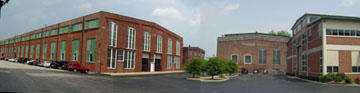
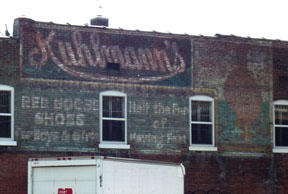
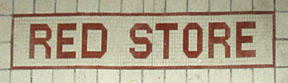
One of the town's major employers in the early 20th Century was the American Car and Foundry Company, whose sprawling plant was located at the northern end of Main. Seen at the top of this post, its campus has been painstakingly converted into a multi-use business park. A little further south, 324 N. Main still shows traces of the dry goods store founded by George Kuhlmann over 100 years ago. The space is now occupied by offices, but the Kuhlmann's logo still appears in a Red Goose Shoes ad painted on the building's side long ago, and it's also set in the tile at the entrance.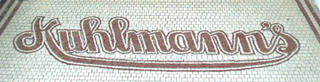


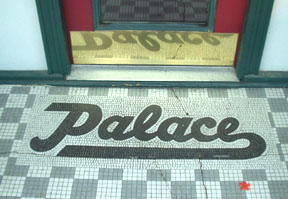
You might have to lift a mat to see them, but there are several other logos for extinct businesses still set in the entrance tile along North Main.Main Street is fairly narrow, and it's difficult to get a photo of an entire building directly from the front. A conveniently placed parking lot in the first block of South Main, however, allows a great shot of the swankiest 20th-century edifice on the whole street: The Elks Building (below).
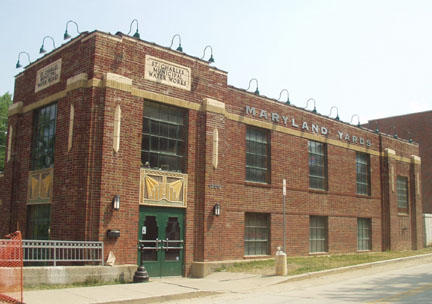
Downtown blocks are also narrow from front to back, and the buildings back up to the next street--which, as a result, serves mainly as an alley. I'd hoped this meant some old signage remained around back, but--save for the Red Goose sign--there wasn't any. Many of the bars and restaurants, however, use their sunken backyards as multi-tiered decks for fair-weather dining. One business had an ancient panel van in its small back lot, with "FM" painted graffiti-style on the side. The word "Spit" was also scrawled over it, and I wouldn't have known what that was about if I hadn't happened to catch "Beat Street" on TV the night before! Off of the main drag, down near the huge Ameristar Casino, new housing is being built in a classic brick townhouse style that complements the old Water Works building that stands in the midst of the development. It's been handsomely restored as a bar and grill called Maryland Yards.
 Downtown St. Charles is also home to a fanciful little building with a corner tower; it's now a bail-bonds office, but I'm pretty sure it housed a taxicab company when I first noticed it 25 years ago.
(To be continued)